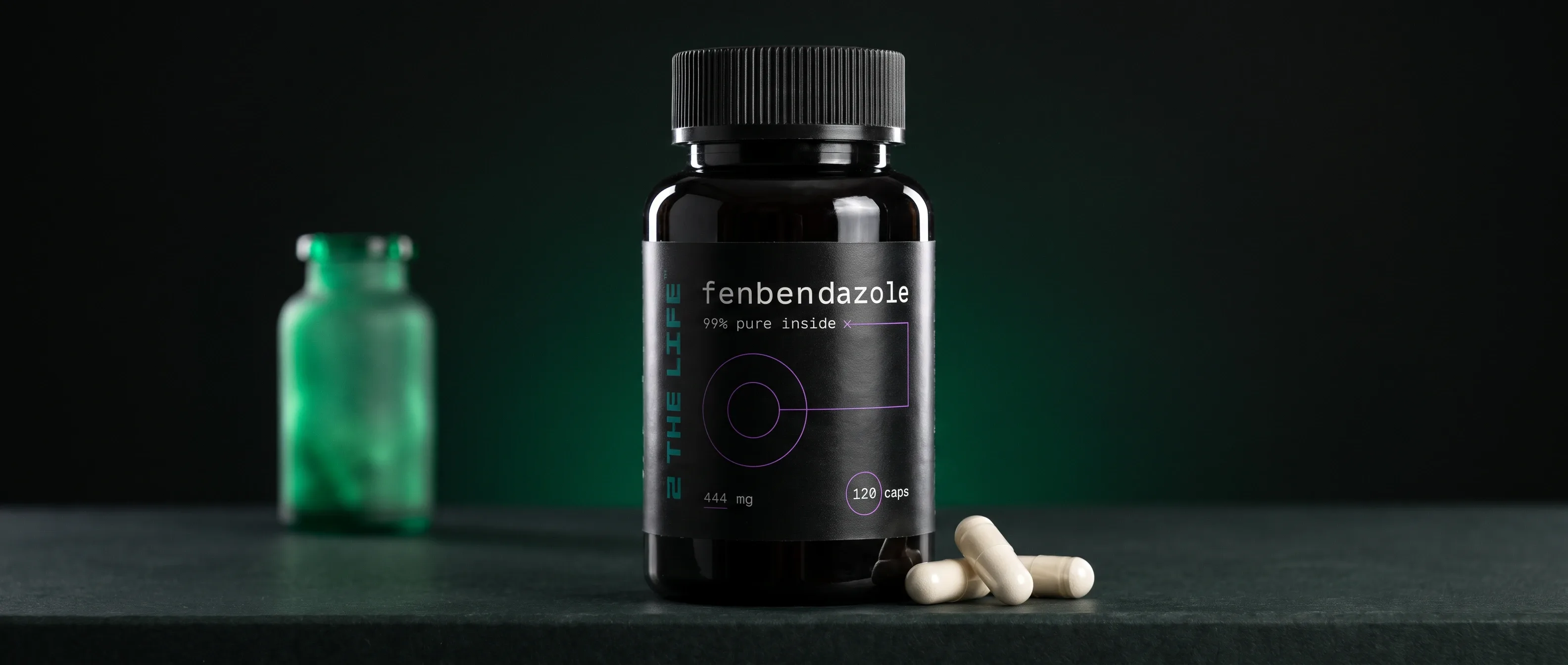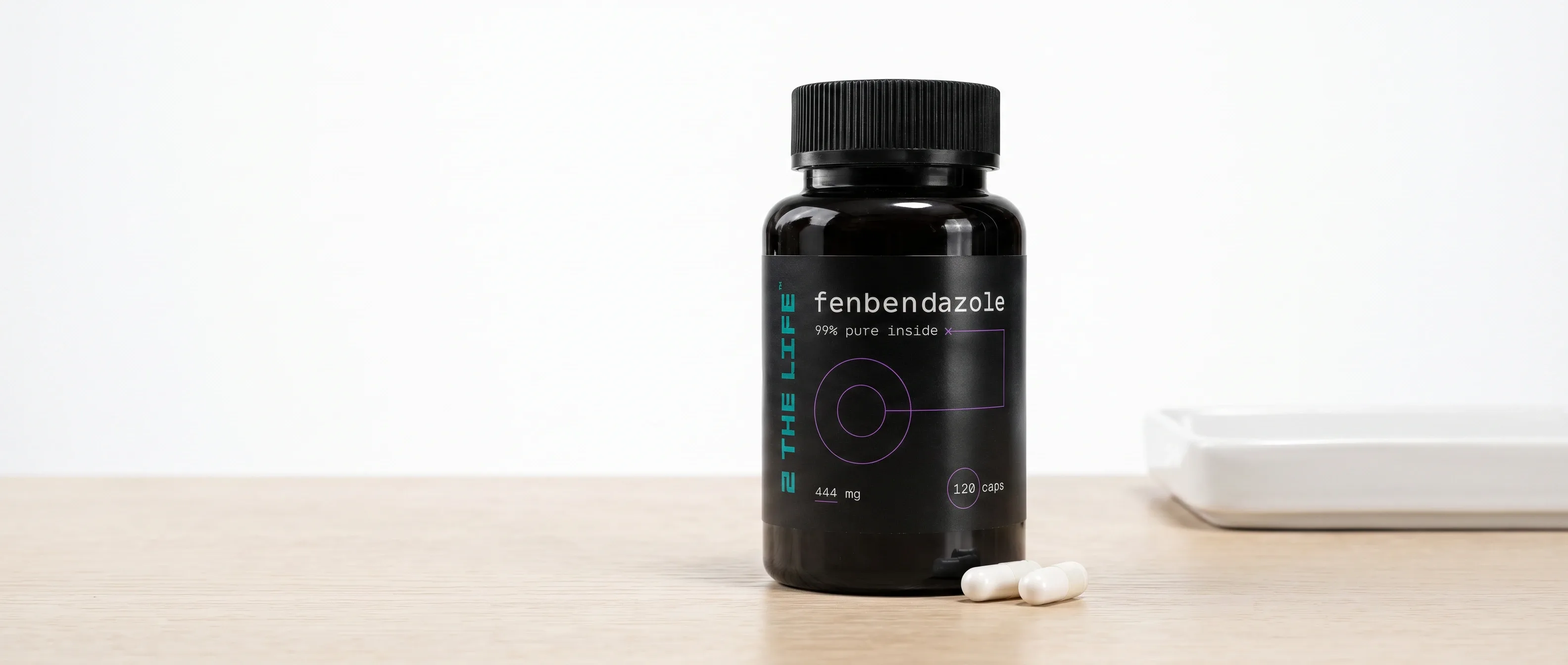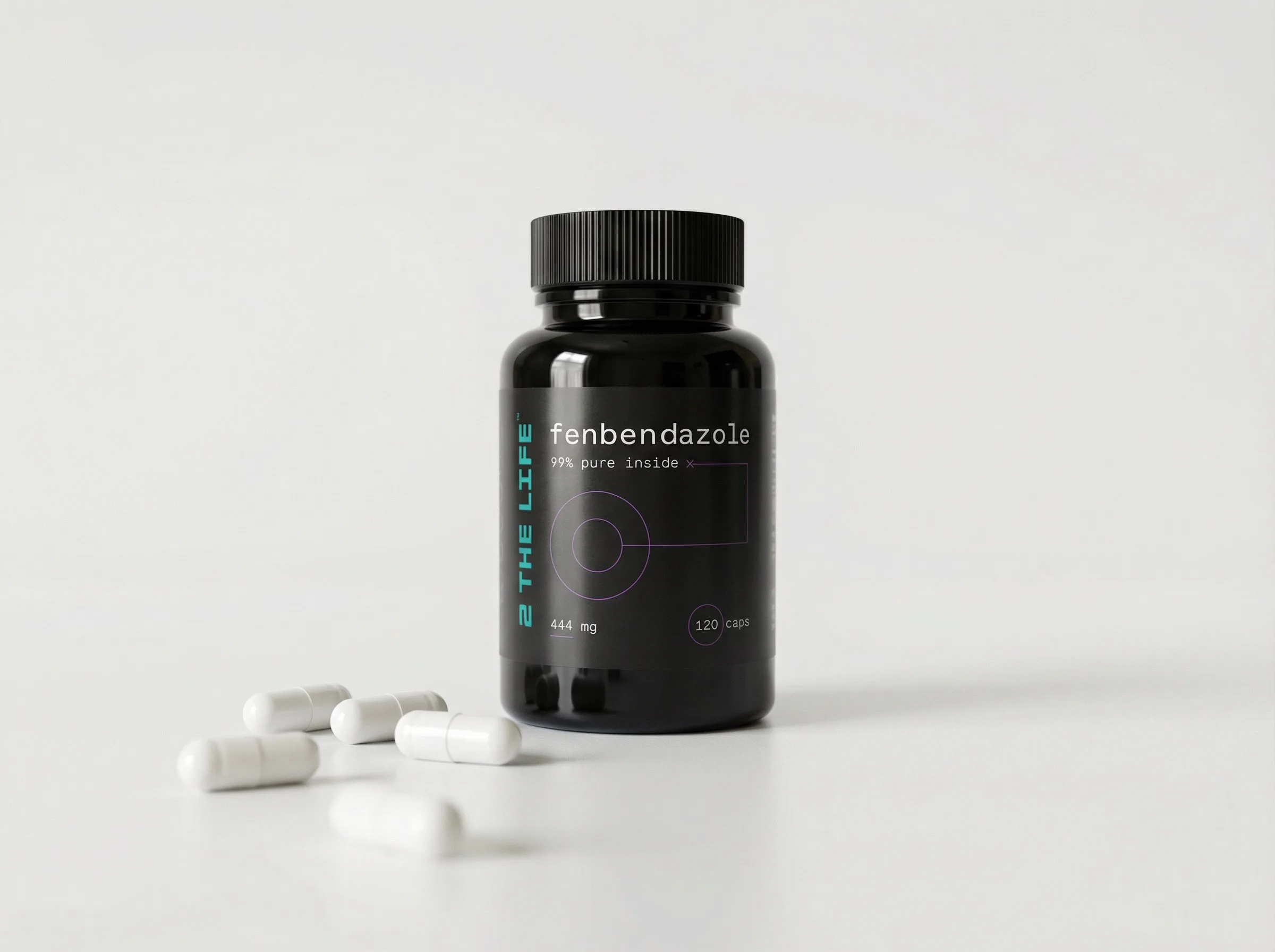
If you've started researching fenbendazole, you've likely encountered two numbers repeated across forums, protocols, and product pages: 222 mg and 444 mg. Both are widely discussed. Both are commercially available. But they are not simply interchangeable choices — the difference between them reflects a real debate about pharmacokinetics, absorption, and how closely one should adhere to the original anecdotal protocol versus adaptations that emerged afterward. This article breaks down where each number comes from, what the evidence (and the lack of it) says about dosing, and how to think through the decision.
Where These Numbers Actually Come From
Understanding the origin of these two doses is essential context, because neither number was derived from a human clinical trial designed to establish an optimal anticancer dose. Both emerged from practical, real-world circumstances.
222 mg is the amount contained in one packet of Panacur C, a veterinary deworming product formulated for dogs. This became the reference dose because it is the amount Joe Tippens — a stage-4 lung cancer patient whose widely circulated personal account is the origin point of interest in this compound — used in his self-directed regimen. As detailed in our overview of the Joe Tippens protocol, he took one packet (222 mg) daily for three days, followed by four days off, continuing this cycle indefinitely alongside other supplements. The dose of 222 mg, in other words, was not chosen based on human pharmacology — it was chosen because that's how the veterinary product happened to be packaged.
444 mg is exactly double that amount. It gained traction later, as more people — including some physicians and researchers writing informally about the compound — began scrutinizing fenbendazole's pharmacokinetic profile more closely. The core argument, discussed in detail in our comprehensive dosage guide, is that fenbendazole's oral bioavailability in mammals is low enough that the 222 mg dose derived from veterinary packaging may not produce sufficient systemic or tissue concentrations to be biologically meaningful in humans.
Note: Neither 222 mg nor 444 mg has been validated in human clinical trials for anticancer activity. Both figures are extrapolations — one from a veterinary product's packaging, the other from pharmacokinetic reasoning applied after the fact. This article summarizes the reasoning behind each without endorsing either as clinically proven.
The Bioavailability Argument for 444mg
Fenbendazole belongs to the benzimidazole class of anthelmintics, a family that also includes mebendazole and albendazole. A defining pharmacological feature of this class is poor and variable oral absorption. Fenbendazole is highly lipophilic and essentially insoluble in water, which means that a substantial fraction of any oral dose passes through the gastrointestinal tract without ever reaching systemic circulation.
Veterinary pharmacokinetic studies in dogs and livestock have repeatedly shown that fenbendazole's oral bioavailability is low and highly dependent on formulation, particle size, and — critically — the presence of dietary fat. Fat co-administration can substantially increase absorption because fenbendazole partitions into lipid micelles in the small intestine, which enhances its passage across the intestinal epithelium. This is the pharmacological basis for the near-universal advice to take fenbendazole with a fatty meal, discussed further below.
The practical implication that many researchers and self-experimenters draw from this is straightforward: if only a modest percentage of an oral dose is absorbed, then doubling the nominal dose (from 222 mg to 444 mg) may be a reasonable way to compensate for the drug's inherent absorption limitations, without necessarily doubling the risk profile in a linear fashion — since absorption, not the nominal dose, ultimately determines systemic exposure.
This reasoning is plausible and grounded in real pharmacokinetic principles, but it's worth being precise about its limits: there is no published human dose-ranging study establishing that 444 mg produces meaningfully higher peak plasma concentrations, tissue concentrations, or clinical effects than 222 mg. The argument for 444 mg is a mechanistic inference, not a demonstrated clinical outcome, in humans specifically.
What the Cellular Research Actually Shows
Separate from the human dosing debate, there is a body of laboratory research examining fenbendazole's effects on cancer cell lines and in animal cancer models. A frequently cited study by Dogra and colleagues, published in Scientific Reports in 2018, found that fenbendazole acts as a moderate microtubule-destabilizing agent — meaning it interferes with the cytoskeletal structures cells rely on for division, a mechanism broadly analogous to (though distinct in specifics from) some conventional chemotherapeutic microtubule-targeting agents.1 Other in vitro work has explored fenbendazole's interactions with p53 signaling, glucose metabolism (via effects on GLUT transporters), and induction of oxidative stress in tumor cells.
It is important to be clear about what these studies do and do not establish. They were conducted in cultured cells or animal models, using concentrations and exposure durations that may not directly translate to achievable concentrations in human tissue following oral dosing at 222 mg or 444 mg. No study to date has directly compared these two specific human oral doses against each other for anticancer outcomes. For a broader discussion of the existing preclinical literature and its limitations, see our detailed review of the fenbendazole cancer protocol.
Head-to-Head Comparison
| Factor | 222 mg | 444 mg |
|---|---|---|
| Historical basis | Joe Tippens' original protocol; matches one Panacur C packet | Later adaptation based on bioavailability reasoning |
| Convenience | Requires 2 capsules to reach 444 mg total | 1 capsule delivers the full 444 mg dose |
| Adoption | Preferred by those following the original anecdotal protocol exactly | Preferred by many practitioners and self-experimenters today |
| Absolute exposure | Lower nominal dose; lower theoretical risk margin concern | Higher nominal dose; still considered low-risk in most anecdotal reports, but less studied at scale |
| Monitoring needs | Baseline and periodic liver panels recommended | Baseline and periodic liver panels recommended, arguably more important |
| Best suited for | Those new to fenbendazole, wanting a conservative starting point | Those who have tolerated 222 mg well or want to follow the bioavailability-adjusted approach from the outset |
The Schedule Matters As Much As the Dose
Regardless of which nominal dose is chosen, both are typically administered using the same cycling schedule rather than continuous daily dosing. The most widely referenced pattern, drawn directly from the Tippens account, is:
- 3 days on, 4 days off — the original schedule, repeated indefinitely
- 5 days on, 2 days off — an alternative used by some practitioners, intended to increase cumulative exposure
- Continuous daily dosing — used by a minority, but generally considered outside the boundaries of the original protocol and associated with greater theoretical concern for hepatic strain
The rationale offered for cycling rests on two ideas, both plausible but not rigorously proven in this context. The first is a variation on the concept used in intermittent chemotherapy dosing: giving cells (and potentially resistant cell subpopulations) less opportunity to adapt to constant drug exposure. The second, more concrete rationale, is hepatic recovery — fenbendazole, like other benzimidazoles, is metabolized substantially by the liver, and periodic rest days are thought to reduce the cumulative burden on hepatic enzyme systems, particularly relevant for anyone using the compound over months or years.
For a full breakdown of scheduling variations, loading strategies, and how these interact with concurrent supplementation, see our fenbendazole dosage guide.
Which Should You Choose?
Consider starting with 222 mg if:
- You want to follow the original Joe Tippens protocol as closely as possible, including its exact historical dose
- You are new to fenbendazole and want to assess personal tolerance — gastrointestinal response, energy levels, any unexpected reactions — before increasing the dose
- You are introducing fenbendazole alongside other agents (such as ivermectin, curcumin, or CBD, all part of various extended protocols) and prefer to introduce one variable at a time to isolate any effects or side effects
- You have any pre-existing liver concerns and want the most conservative starting point available
Consider 444 mg if:
- You have reviewed the bioavailability literature and find the argument for higher dosing to compensate for poor absorption persuasive
- Capsule convenience matters to you — one capsule versus two, especially relevant for long-term, multi-month regimens
- You have already used 222 mg for a period without adverse effects and are considering stepping up
- You are working alongside a knowledgeable practitioner who has recommended this dose based on your individual circumstances
In either case, the following practices apply regardless of which dose you select:
- Take the dose with a fatty meal — avocado, olive oil, full-fat yogurt, or nut butter are commonly cited options — to improve absorption given fenbendazole's lipophilic nature
- Follow a cycling schedule (3-on/4-off being the most common reference point) rather than continuous daily use
- Establish a baseline liver panel (ALT, AST, and ideally bilirubin and alkaline phosphatase) before starting, and repeat testing periodically — many practitioners suggest every 4–8 weeks during ongoing use
- Inform your oncologist or treating physician. This is especially important if you are on active conventional treatment, since benzimidazoles are metabolized via hepatic cytochrome P450 pathways and could theoretically interact with other medications processed through the same systems
- Discontinue and seek medical evaluation promptly if you notice jaundice, unusual fatigue, dark urine, or right-upper-quadrant abdominal pain — all potential signs of hepatic stress
The Role of Fat-Soluble Co-Administration
Beyond the meal timing itself, the original Tippens protocol paired fenbendazole with vitamin E succinate — a fat-soluble antioxidant compound. While the precise pharmacological rationale for this pairing was not derived from controlled trials, it is consistent with the broader absorption principle: fat-soluble compounds administered together with a lipophilic drug like fenbendazole may share absorption pathways, and some practitioners view the vitamin E component as both a companion antioxidant and an absorption aid. Curcumin, another commonly paired compound, has its own bioavailability challenges and is frequently taken with piperine or lipid-based formulations for similar reasons.
A Note on Purity and Formulation
An important but sometimes overlooked variable in the 222 mg vs. 444 mg discussion is formulation source. Veterinary Panacur C, the original source of the 222 mg reference dose, contains fenbendazole combined with inert binding agents, flavoring components, and fillers appropriate for animal use — it is manufactured to veterinary product standards, not human pharmaceutical or supplement standards. Products formulated specifically for human use are typically manufactured to a stated purity threshold (commonly 99%+) with an accompanying Certificate of Analysis confirming identity and purity via independent lab testing. This distinction matters regardless of which dose you choose, since dose comparisons are only meaningful if the underlying material purity is consistent and verified.
Practical Takeaway
The 222 mg vs. 444 mg decision is less about one dose being definitively "correct" and more about which set of assumptions you find more persuasive: strict adherence to the historically documented anecdotal protocol (222 mg), or the pharmacokinetically motivated adjustment for fenbendazole's known absorption limitations (444 mg). Both approaches share the same cycling schedule, the same emphasis on fat co-administration, and the same need for liver monitoring and physician communication. Neither has been validated through controlled human trials for cancer-related outcomes, and both should be approached as unproven, self-directed interventions rather than established treatments.
Recommended Products
All products are independently lab-tested for purity (99%+) and ship from the United States.
Frequently Asked Questions
What is the standard fenbendazole dose for the Joe Tippens protocol?
The original Joe Tippens protocol uses 222 mg of fenbendazole per day, taken for 3 days on and 4 days off, repeated continuously. This dose was based on the contents of one packet of Panacur C, the veterinary product Tippens originally used, and was not derived from a human pharmacokinetic study.
Why do some people take 444mg instead of 222mg?
Fenbendazole has notably low oral bioavailability — a substantial portion of an oral dose is not absorbed into systemic circulation. Because of this, some practitioners and researchers reason that 444 mg may be necessary to achieve meaningful tissue concentrations in humans, though this has not been confirmed through dedicated human dose-ranging trials.
Can I take two 222mg capsules instead of one 444mg capsule?
Yes. Two 222 mg capsules provide the same total nominal dose as one 444 mg capsule. The 444 mg option exists primarily for convenience, allowing a single capsule to deliver the full higher dose rather than requiring two separate capsules.
Should fenbendazole be taken every day?
Most protocols do not recommend continuous daily use. The standard cycling schedule is 3 days on, 4 days off, which is thought to reduce cumulative hepatic burden and may help prevent adaptive resistance in target cells. Continuous daily dosing was not part of the original documented protocol.
How should fenbendazole be taken for best absorption?
Fenbendazole should generally be taken with a fatty meal — such as avocado, olive oil, or full-fat yogurt — since its lipophilic, poorly water-soluble nature means absorption is significantly enhanced by co-administration with dietary fat. Fat-soluble companions like vitamin E succinate, part of the original Tippens protocol, are also commonly included.
Is veterinary-grade fenbendazole the same as human-grade fenbendazole?
No. Veterinary products like Panacur C include binding agents, flavorings, and fillers appropriate for animal dosing and are manufactured to veterinary product standards. Fenbendazole intended for human supplementation is typically manufactured to a stated purity threshold (often 99%+) with independent lab verification, which is not guaranteed with veterinary formulations.
References
- Dogra N, et al. "Fenbendazole acts as a moderate microtubule destabilizing agent and causes cancer cell death by modulating multiple cellular pathways." Scientific Reports. 2018. https://pubmed.ncbi.nlm.nih.gov/30093705/
- Tippens J. "My Cancer Story Rocks" (personal account). https://mycancerstory.rocks/
This content is for informational purposes only and does not constitute medical advice. Always consult a qualified healthcare provider before starting, stopping, or changing any medication or supplement regimen, particularly if you have an active medical condition or are undergoing cancer treatment.